Paphos travel guide, in your ear
A sun-baked city on the southwest coast of Cyprus, the mythological birthplace of Aphrodite and the island's ancient capital: a UNESCO World Heritage Site famous for Roman mosaics, rock-cut royal tombs and a harbour castle, with a lively seaside resort below and an old town on the ridge, the gateway to the wild Akamas coast.
- 13 narrated stops
- ~39 minutes of stories
- 6 languages
- Offline ready

What is the Gingerguide Paphos tour?
Paphos has 13 narrated sights on Gingerguide's self-guided audio walking tour. Plan about a full day to walk them all. The app is free to download, every city has a free preview, and the tour works offline in six languages.
It is a self-guided audio walking tour of Paphos, Cyprus, inside the Gingerguide travel guide app. The tour maps 13 sights and tells the story of each one in a two to three minute narration with a lifelike AI voice. When the story is not enough, ask the built-in AI guide about the place and keep the conversation going. Everything is available in six languages and works fully offline after a one-time download.
Which audio guide app is best for Paphos?
It depends on the trip. For Paphos, Gingerguide gives you all 13 sights on one offline map, narrated in six languages, with an AI guide to ask. Other apps are better for a single human-narrated walk, for museum guides, or for driving. We compared the main options honestly, with sources.
About Paphos
Welcome to Paphos, the golden, sun-soaked city on the southwest coast of Cyprus, where myth and history lie thick on the ground. For the ancient Greeks this whole coast belonged to Aphrodite, the goddess of love, who was born, they said, from the foam of the sea just along the shore. Few places wear their legends so lightly, or keep so much of the ancient world so close to the beach.
Paphos has two halves. Down by the water is Kato Paphos, the lower town, built around a medieval harbour and its little castle, full of hotels, tavernas and the great field of ancient ruins. Up on the ridge is Ktima, the old upper town, where Cypriots live and shop around a covered market. A long avenue, named for the Apostle Paul, joins the two.
This was once the capital of the whole island. The ancient city of Nea Paphos was the seat of Cyprus under the Greek Ptolemies and the Romans, and the ruins it left are extraordinary: above all the Roman floor mosaics, among the finest in the Mediterranean, and the rock-cut Tombs of the Kings by the sea. The whole city, together with the old sanctuary at Kouklia, is a UNESCO World Heritage Site.
It is a holy place in more ways than one. The Apostle Paul preached here and, the Bible says, converted the island's Roman governor; a pillar in the town marks where tradition says he was scourged. In the hills a medieval hermit carved a frescoed cave; by the roadside, pilgrims still tie rags to a sacred tree; and across the water once stood the greatest temple of Aphrodite in the ancient world.
Beyond the town, the Paphos coast is a place of beauty. There is the sea stack of Aphrodite's Rock, where love was born; the family beaches of Coral Bay; and, at the island's wild northwestern tip, the roadless Akamas peninsula, with its turquoise lagoon, its turtles, and the shaded pool where the goddess is said to have bathed.
So Paphos offers a rare mixture: world-class ancient ruins and easy Mediterranean beaches, Greek myth and early Christian history, a lively harbour and a wild coast, all under a warm and generous sun. Take your time, wander from the mosaics to the sea, and let the city of Aphrodite work its old magic. Welcome to Paphos. Let us begin.
One day in Paphos
A simple way to walk the highlights, following the route order in the app. Swap anything; Paphos rewards detours.
Midday
Afternoon and evening
Have more than a day? Paphos in 2 days →
What to see in Paphos: all 13 stops
Every place below has its own narrated story in the app, and its own answers when you want more. Walk them in any order; the map shows what is around you.
-
Paphos Archaeological Park
The ruins of the ancient capital of Cyprus, a UNESCO site by the sea famous above all for its superb Roman floor mosaics, with grand villas, a theatre, an agora and a ruined fortress.
-
Tombs of the Kings
A vast rock-cut necropolis by the sea, where the nobles of ancient Paphos were buried from the fourth century BC in grand underground tombs with sunken courtyards ringed by columns carved from the living rock.
-
Paphos Castle
The square stone fort that guards the mouth of Paphos harbour, a much-rebuilt castle from Byzantine, Lusignan, Venetian and Ottoman hands, now the emblem of the waterfront and the stage of a summer opera festival.
-
Kato Paphos Harbour
The lively seafront heart of the resort, a small working harbour of fishing boats and excursion craft below the castle, lined with fish tavernas and cafes, beside the ancient city and its mosaics.
-
Agia Kyriaki Chrysopolitissa and St Paul's Pillar
A small stone church standing among the ruins and surviving mosaics of a huge fourth-century basilica, with the pillar where tradition says the Apostle Paul was scourged before converting the Roman governor.
-
Monastery of Agios Neophytos
A monastery in the hills north of Paphos founded by a twelfth-century hermit who carved his cave retreat from the rock and had it painted with exquisite Byzantine frescoes, beside a later church and museum.
-
Catacomb of Agia Solomoni
An ancient rock-cut catacomb and chapel in Kato Paphos, a place of pilgrimage for centuries, with faded wall paintings, a healing spring and a great tree hung with the votive rags of hopeful visitors.
-
Paphos Old Town (Ktima)
The upper old town of Paphos, set back from the resort on the ridge, with its covered municipal market, an Ottoman bathhouse, neoclassical lanes, leafy gardens and museums, the everyday Cypriot town above the ancient coast.
-
Geroskipou
A town east of Paphos whose name means 'holy garden', famed for its rare five-domed Byzantine church of Agia Paraskevi with its old frescoes, and for the sweet 'Cyprus delight' made here since the 19th century.
-
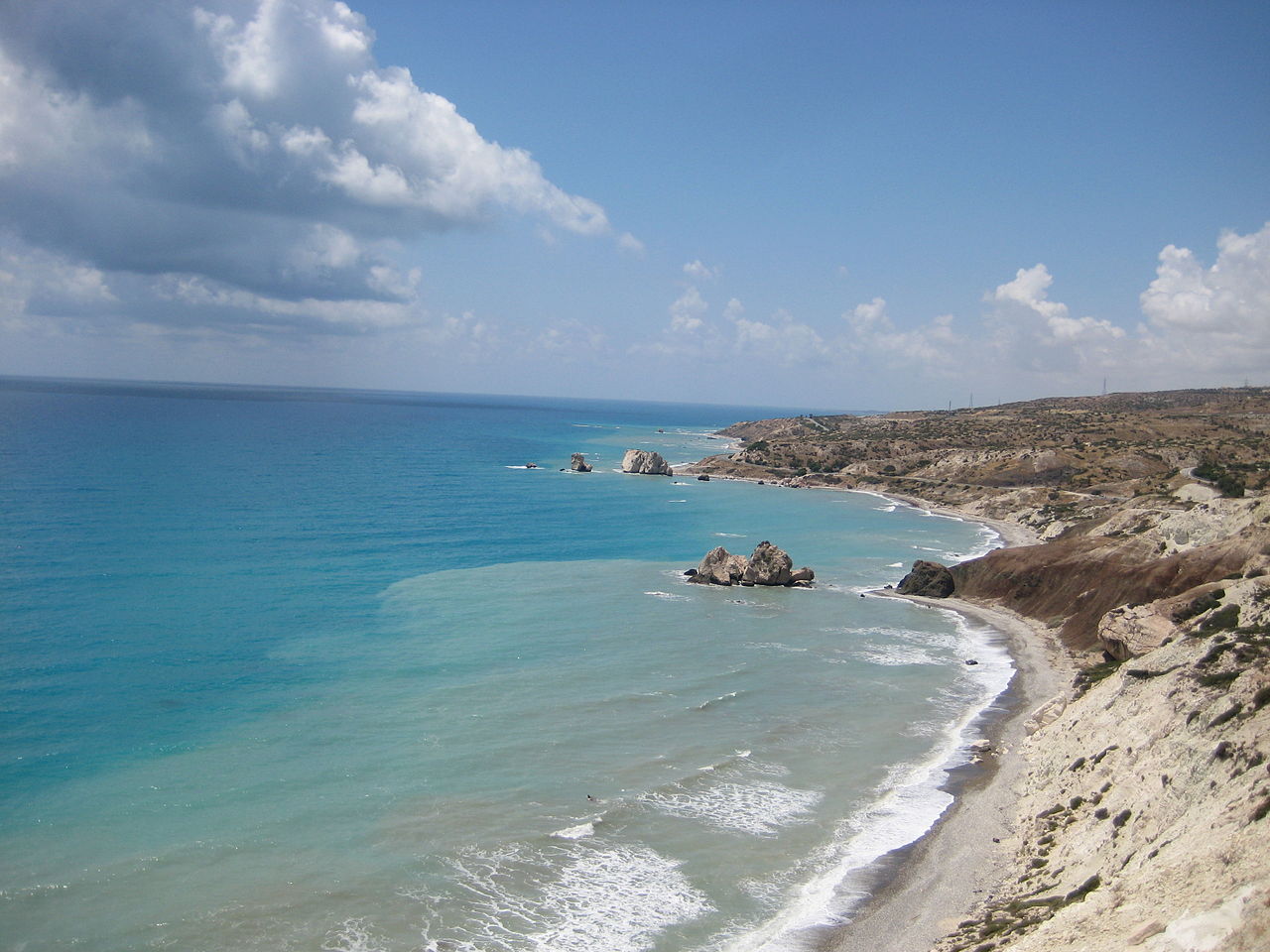
Petra tou Romiou (Aphrodite's Rock)
The sea stack on a pebble coast southeast of Paphos where, in Greek myth, the goddess Aphrodite rose from the foam of the sea; a famous viewpoint with a legend that swimming around it brings beauty.
-
Akamas Peninsula and the Baths of Aphrodite
A wild, roadless peninsula at the northwest tip of Cyprus, protected for its gorges, sea caves, turquoise Blue Lagoon and nesting turtles, with the shaded grotto pool where legend says Aphrodite bathed.
-
Coral Bay
The most popular beach near Paphos, a sheltered crescent of pale sand between two headlands with calm, clear, shallow water, and, on the cliff above, the ruins of a Bronze Age settlement of early Greek settlers.
-
Palaipaphos and the Sanctuary of Aphrodite
The ruins of Old Paphos at Kouklia, site of the ancient Sanctuary of Aphrodite, a pilgrimage centre for the whole classical world where the goddess was worshipped as a black conical stone, now in its museum.
Three things most visitors miss
Paphos Archaeological Park
Nea Paphos was founded in the late fourth century BC and was capital of Cyprus through the Hellenistic and Roman ages; its ruins form part of the UNESCO World Heritage Site inscribed in 1980.
Tombs of the Kings
Despite the name, no kings were buried here; the title comes from the grandeur of the tombs, which served the aristocrats and officials of Nea Paphos from the fourth century BC.
Paphos Castle
A Byzantine fort first guarded the harbour; the Lusignans built the castle, the Venetians dismantled its western tower in 1570 to deny it to the Ottomans, who rebuilt it in 1592.
Paphos tour: questions and answers
How many days do you need in Paphos?
To see Gingerguide's 13 narrated highlights of Paphos on foot, plan about a full day. The tour is self-guided, so you set the pace: cover the whole route in a day or spread it across a trip. Each sight has a two to three minute story, roughly 39 minutes of audio in total.
What are the top things to see in Paphos?
Gingerguide narrates 13 sights in Paphos, starting with Paphos Archaeological Park, Tombs of the Kings, Paphos Castle, Kato Paphos Harbour. Each one has its own audio story on a live map, and you can ask the built-in AI guide anything the story leaves open.
Do I need a tour guide in Paphos?
Not a human one. Gingerguide covers Paphos with 13 narrated sights, so you get the stories a guide would tell, at your own pace and on your own route. And if a story leaves you with a question, you can ask the built-in AI guide and discuss the place right there, the way you would with a guide.
How many stops does the Paphos audio tour have?
The Paphos guide covers 13 sights. Each one has a researched story of roughly three minutes, about 39 minutes of listening in total. You choose the order and the pace; the tour is self-guided.
Does the Paphos tour work offline?
Yes. You can download Paphos in the app, audio, photos, and offline map tiles included. After the download, the full tour works without an internet connection.
Which languages does the Paphos guide support?
Every Paphos narration is available in English, Spanish, French, German, Turkish, and Chinese. You can switch the language in the app at any time.
Is the Paphos audio guide free?
The Gingerguide app is free to download, and Paphos includes a free preview: you can see all 13 sights on the map at no cost. A premium subscription unlocks the full stories, audio narration, and the offline download.
Hear Paphos tell its own story.
Preview all 13 Paphos stops free in the Gingerguide app.
Updated: